Strength of sense of community & ease of access to reliable social-emotional support systems
We believe all people should have equal access to a strong sense of community and reliable social-support systems. While these ideas may seem abstract or immeasurable, there are other aspects of communities that can determine equal (or unequal) access to certain resources, funding, or benefits that help communities to thrive - for example, location, race, gender, or socioeconomic status. Below, find information on determining prevalence of this harm in an area and learning more about new systems that promote social equality and equity in communities.

Determining Prevalence in an area
County Health Rankings & Roadmaps
This resource analyzes the percentage of adults reporting that they sometimes, rarely, or never get the social and emotional support they need.
This article concludes the following:
*Much of our health depends on trusting relationships that provide us with comfort, guidance, and the information needed to navigate a society. Relationships are a source of emotional and social support critical for thriving.
*About 1 in 4 adults report a lack of social and emotional support.
*Those who report a lack of social and emotional support also report lower quality physical health, such as higher stress rates, depression and anxiety, heart disease, stroke, and premature death.
*Societies that promote prejudice or make laws erasing the existence of de-valued groups of people create conditions where fewer people are willing to provide social or emotional support to people suspected of holding these devalued identities. This disproportionately harms minority groups.
Read the full report here.
County Health Rankings & Roadmaps Instructions:Open Tool > within the source, scroll down to “data” to learn more about this harm in an area > Insert county, state, or ZIP > Select a year > view results. After finding county data, scroll below to explore more about the county’s health or compare the data to surrounding counties > Click each tile of the interactive chart to learn more about population health & well-being, community conditions, societal rules, and power.
Rural Health Information Hub - Interactive Map
This map uses data determined by Federal Health Resources and Services Administration. The data is based on which counties are not in a shortage area, partially in a shortage area, or completely in a shortage area. This tool can be used to determine which counties are most vulnerable to this harm.
Interactive Map Instructions: Open Tool > narrow focus to metro or non metro by clicking either button above map > Hover map over state of interest to bring up a closer look to various counties based on how you have narrowed the search > click on county of interest > view data.
ArcGis Prevalence of Social Isolation - Interactive Map
This tool is based on data with crude prevalence percentages of loneliness. This resource can be used to determine which counties and populations are most vulnerable to social isolation, and allow for further analysis of possible causes.
ArcGis Interactive Map Instructions: Open Tool > view legend on left hand side denoting coloration and percentage ranges > click directly on a state county > estimated prevalence of feeling socially isolated, the number of adults living in that area brought up in text box > for more demographic, social, and economic data click on census county profile link within the text box.
Public education as source of community strength & strong social support
Public schools are more than just a space for learning - they also act as economic engines, community hubs, bridges between neighbors, and a source of investment in the future. When we invest time, money, energy, and resources into schools, we build much stronger communities that thrive. Below, learn more about recent research, the future of education for communities, and advocacy efforts.
A modern approach: Community Schools
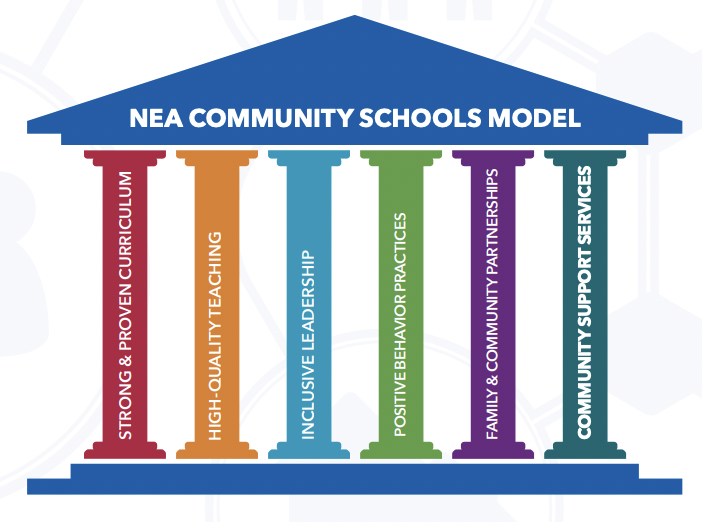
One way that schools are modeling community strength and social support are through a “community school” integrated approach. Community schools offer before and after school programs beyond the traditional extracurricular and athletic programs; more learning opportunities for family and community members; and health and wellness support.
Based on the Sustainable Community Schools Model, this approach seeks to create partnerships with community organizations and businesses to broaden the scope of learning and make schools hubs for community activity.
There are 6 pillars to community schools:
(1) Strong and proven curriculum
(2) High-quality teaching
(3) Inclusive leadership
(4) Positive behavior practices
(5) Family and community partnerships
(6) Community support services
*View downloads and fact sheets at bottom of this page.
How can local schools be used to advocate for higher quality community resources?

Toolkit: Ideas to organize locally to protect students and public schools
This toolkit provides steps to make an impact in a school community, such as organizing events, setting goals for community-based initiatives, deciding on important topics to discuss, and putting out messages for advocacy.
In this website, find the “How much funding do your schools get from the federal government” federal funding guide. View tool here.
relevant articles
Why local leaders should champion ‘community schools’
*“New data from the National Center for Education Statistics show that the pandemic erased more than two decades of progress in reading and math for 9-year-old students. The effect was most profound for students from low-income communities—exacerbating the pre-pandemic achievement gap between those students and their higher-income peers.”
*"Benefits of a positive school/community relationship include advancing economic prosperity, enhancing the physical environment, increased social capital, and fostering civic involvement”
Read the full article here.
6 powerful strategies to promote school and community relations
*A good education produces young people with a positive sense of self-concept and sound emotional and mental well-being. The school on its own can not instill these values. In the same vein, parents and social groupings alone can not produce well-rounded individuals.”
*6 strategies
(1) School and community considered equal partners
(2) Find ways to join and connect with communities
(3) Establish community building activities
(4) Visit the community and participate in events
(5) Involve the community in internet safety conversations
(6) Set up a community resource map
Read the full article here.
The school as a whole community resource
This article gives important insight into why funding and investing in local schools can have a positive outcome for communities at large, with benefits beyond learning.
The article concludes that community involvement fosters a positive reputation for the school, strengthening its ties to the neighborhood and garnering support for its programs. Designing building assets and resources with both students and the community in mind can often provide new or enhanced means of financial support through rental fees, grants, donations, and volunteer efforts, enabling schools to enhance their resources and offerings.
Read the full article here.
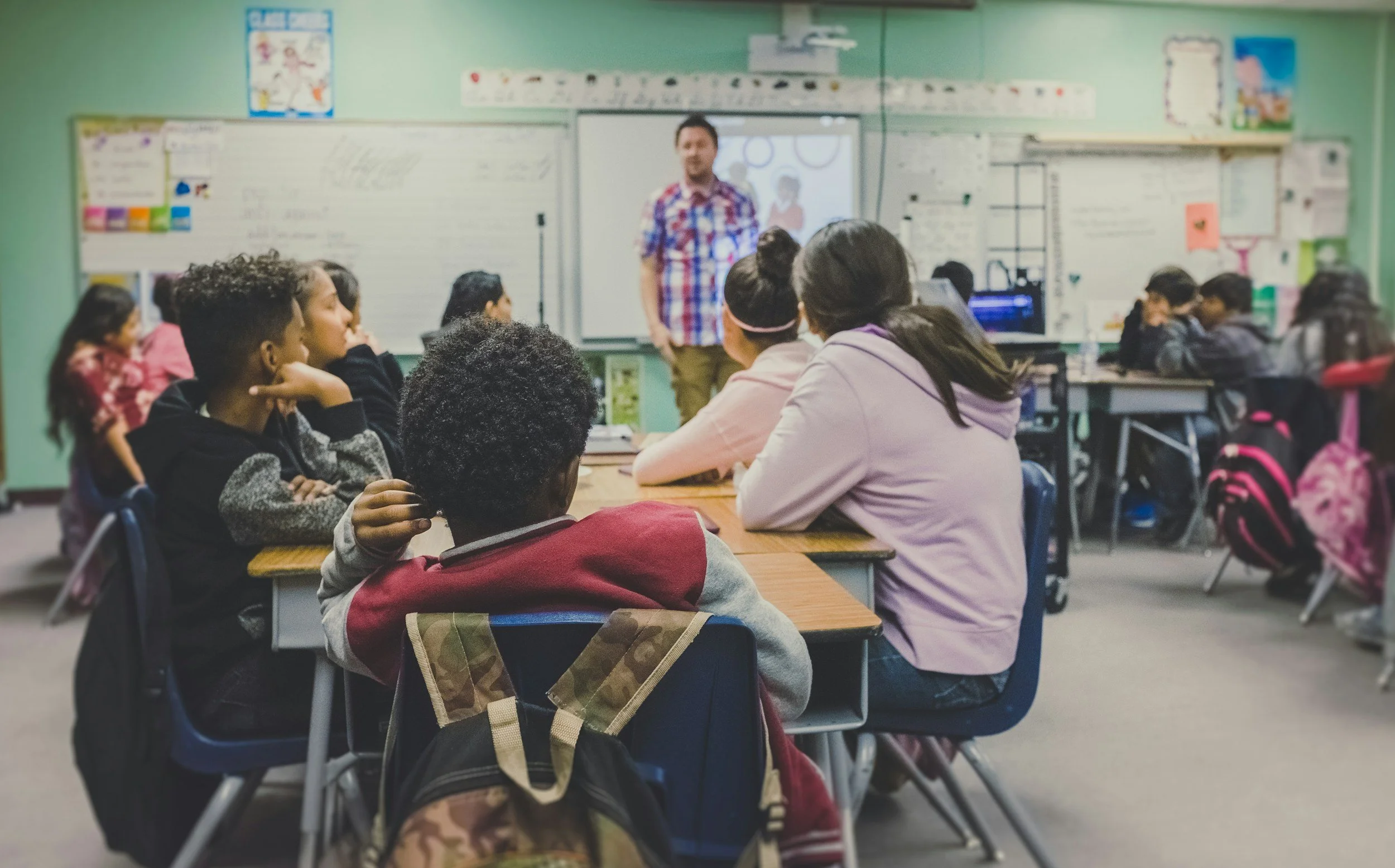
How does having proper resources in public schools help build a sense of community?
The following articles can be helpful for learning about advocacy efforts and creating change in areas experiencing this harm. Demonstrating direct positive impacts of schools and the resources they provide can be crucial to proving their importance for communities. Understanding the full impact of educational resources and spaces can help protect existing resources & communities, and advocate for more.
Strong family and community engagement in schools
A Harvard study argues that all people benefit from effective family-school-community partnerships and receive a turn on their investment, according to Mapp. The study focuses on students, educators, families, & school districts and communities. Mapp argues that successful family engagement requires resources, infrastructure, and leadership. Mutual respect and trust are necessary, and communication, equity, and social connection are all equally important to this process.
Read the full article here.
Importance of local schools in community development
This post concludes that local schools play a vital role in community development by providing education, supporting families, and serving as central hubs for resources and partnerships. 3 main strategies include:
-
Invest in schools as safe spaces where families and children can access support, building lasting relationships and strengthening neighborhood bonds.
-
Work with schools to offer essential resources like health care, nutrition, and mentoring so students can overcome real-life challenges and thrive.
-
Encourage local leaders, businesses, and organizations to collaborate with schools, creating opportunities that benefit everyone from students to employers and residents.