what can be done to minimize misuse of police or legal systems in my community?
Local Involvement: Racial Bias Audits
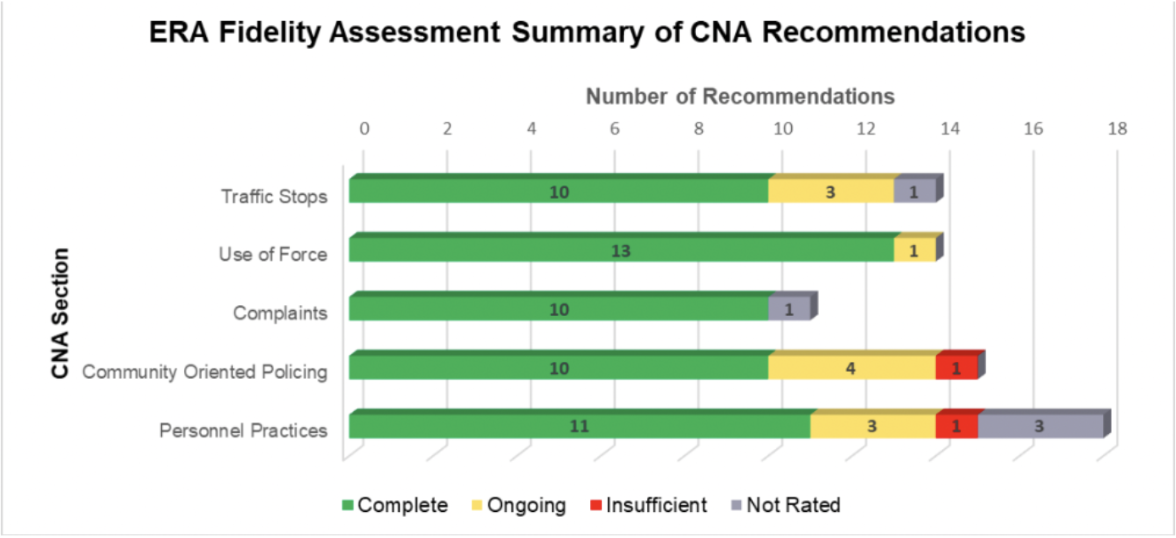
One way communities can promote equality and work to eliminate bias within their police and legal systems is by advocating for an educated and bias free environment, starting as small as local government. An example of this completing a bias audit, which was successful in both Charleston and North Charleston, SC. These audits were conducted in January 2019 by an external non-profit (CNA), hired by the CPD to examine the organization’s policies and procedures. The CPD racial bias audit presents 48 findings and 72 recommendations for action.
What are they?:
Assesses, monitors, and assists CPD in uncovering any aspect of implicit bias, systemic bias, or individual racial bias
Assesses effects of enforcement operations on historically marginalized/discriminated against populations (mostly African-American communities)
Provides recommendations for reform and improvement across all aspects of the community
According to the report:
The final recommendation was completed by 2023
54 recommendations (80.59%) had clear evidence of implementation
11 recommendations (16.41%) had some evidence of implementation and required additional/ongoing work
2 recommendations (2.98%) had insufficient evidence of effective implementation
5 recommendations were not rated for various reasons
To view full report: click here > scroll down to final report > click CPD FINAL REPORT
Why important:
Improves community policing practices, transparency, professionalism, accountability, community inclusion and fairness, effectiveness in the community, and public trust of LE
Considers best practices nationally
Considers community expectations of local and national LE
Engages the community, allows individuals to better understand their interactions and expectations of their local LE
These audits and follow-up assessments can demonstrate LE’s commitment to accountability and community trust by addressing racial equity concerns and implementing reforms
building communities of opportunity
HOW?
It is important for law enforcement to have strong relationships with social services to intervene.
Require and incentivize the inclusion of affordable housing in new developments through:
Inclusionary zoning practices
Community benefits agreements
Density bonuses
Implement equitable growth policies to reduce poverty and increase economic security - connect low income families with employment
Ensure enforcement of fair housing laws
Increase public and private investments in home construction - support first time buyers in finding entry homes
Require federal deposit insurance corporation insured banks to provide high quality and affordable mortgage products to communities of color
Read the full article here.
neighborhood mobility as a remedy for segregation
For over a century, public policies and instructional practices have excluded people of color from well-resourced and opportunity-rich neighborhoods while denying resources and investments to the neighborhoods they live in
Housing vouchers and mobility programs can act as a remedy to discriminatory housing policy
The flexibility they provide families to choose homes and neighborhoods that match their particular needs and preferences
This gives voucher recipients more housing and more neighborhoods options than place-based public housing assistance, and in principle allows them to live in any neighborhood with voucher-affordable housing
Evidence shows that housing vouchers - regardless of whether they are linked to mobility services - have a range of individual family benefits including reductions in overcrowding, in doubling up, in homelessness, in food insecurity, and in child separations and domestic violence
This process led to improvements in adult mental and physical health, children’s education and behavioral outcomes.
It was found that programs that combine vouchers with services intended to help voucher holders navigate their housing searches have had success.
Read the full article here.
effects of stereotypes
Social class matters and, as a social construction, can be described in terms of what persons do.
The meanings of terms such as poor, working class, low income/SES, and rich, wealthy, high income/SES all reflect different definitions and measurements.
Stereotypes manifest in:
Child development
Education
Interactions outside of school
This picture becomes even bleaker upon considering racial biases that often overlap with class-based stereotypes
Both black and white respondents implicitly and explicitly associated Black targets with low-SES jobs and white targets with high-SES jobs
Beyond educational institutions and justice systems, a nation’s economic inequality reflects and shapes its stereotypes
Nations with high income inequality display these complicated stereotype maps, which may subjectively justify and therefore stabilize their unequal systems
Read the full article here.