PEST MITIGATION
People have a right to protection from pests that can threaten their health, homes, property, food systems, and surrounding environment. Effective pest mitigation helps prevent infestations, reduce exposure to disease-carrying pests, and limit the need for harmful or excessive pesticide use.
On this page, you’ll find resources for pest prevention and mitigation, including Integrated Pest Management, mosquito and rodent control, invasive pest information, housing-based strategies, and Region 4-specific programs and contacts.
Southern Integrated Pest Management Center
What’s Included:
Southern pest-management research
Regional pest priorities
Integrated Pest Management projects
Agricultural pest information
Emerging pest issues
University Extension resources
Training and educational materials
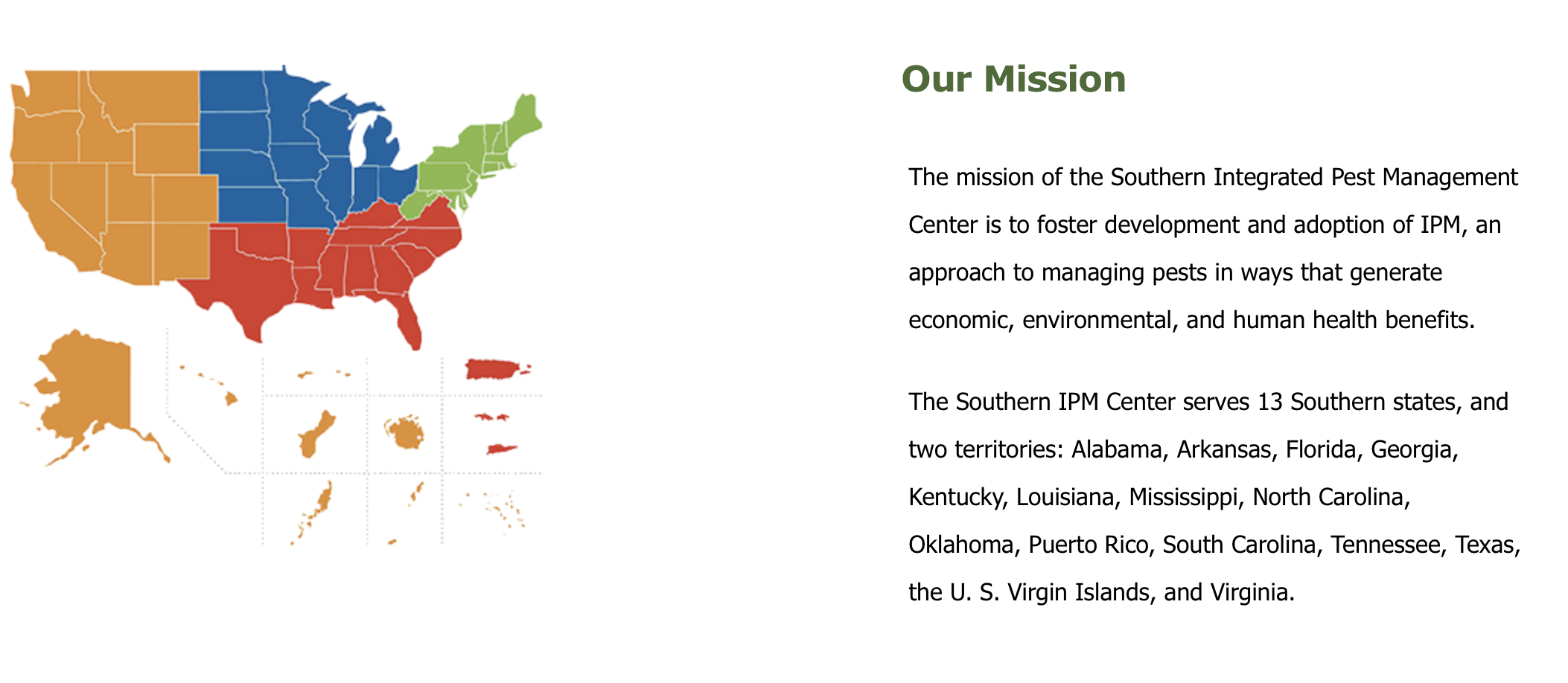
The Southern IPM Center provides pest-management research, education, regional projects, and resources focused specifically on the southern United States, including all eight EPA Region 4 states.
Instructions: Open Tool > Search the site for your state, pest, crop, or pest-management issue. Review research projects and regional pest priorities related to the problem. Follow links to state Cooperative Extension programs when available for more localized information. Use these resources to identify pest mitigation practices developed specifically for southeastern conditions.
Integrated Pest & Mosquito Management
What’s Included:
Pest and mosquito identification
Pest and mosquito population surveillance
Removal of breeding sites and pest habitats
Prevention and source-reduction strategies
Larval mosquito control
Adult mosquito control
Biological, physical, and chemical control methods
Insecticide-resistance monitoring
Reduced-risk and targeted pesticide use
Community education and program evaluation
-
Overview: EPA explains Integrated Pest Management as a long-term approach that combines pest monitoring, prevention, identification, and targeted control. The goal is to manage pests effectively and economically while minimizing risks to people, property, and the environment.
What’s Included:
Setting thresholds for when pest control is necessary
Monitoring and accurately identifying pests
Preventing pests before infestations develop
Selecting lower-risk controls before broader pesticide treatments
Instructions: Open Tool > review the four IPM principles > identify the pest or pest problem affecting the community > determine appropriate monitoring and prevention measures > review available control options > prioritize effective, lower-risk methods before considering broader pesticide treatment.
-
Overview: CDC provides a framework used by local governments and mosquito-control programs to prevent and control nuisance and disease-carrying mosquitoes. Integrated Mosquito Management combines multiple strategies based on mosquito biology, surveillance data, and evaluation of control efforts.
What’s Included:
Mosquito surveillance and identification
Breeding-site reduction and larval control
Adult mosquito control and insecticide-resistance testing
Community education, involvement, and program evaluation
Instructions: Open Tool > review the components of Integrated Mosquito Management > identify which mosquito species and breeding habitats are present in the community > examine surveillance and source-reduction strategies > review larval and adult mosquito-control methods > examine insecticide-resistance testing > use the framework to identify appropriate community-level mosquito mitigation strategies.
-
Overview: CDC provides practical actions residents can take to reduce mosquito populations around homes and neighborhoods. The resource focuses heavily on eliminating standing water and preventing mosquitoes from entering or reproducing around homes.
What’s Included:
Removing and treating standing water
Preventing mosquito breeding around homes
Keeping mosquitoes from entering buildings
Larvicide and adulticide guidance when additional control is needed
Instructions: Open Tool > review outdoor mosquito-control recommendations > identify containers and other locations that collect standing water > empty, cover, remove, or appropriately treat breeding sites > review measures for keeping mosquitoes outside buildings > consult CDC guidance on larvicides or adulticides when standing water cannot be removed or mosquitoes remain a problem.
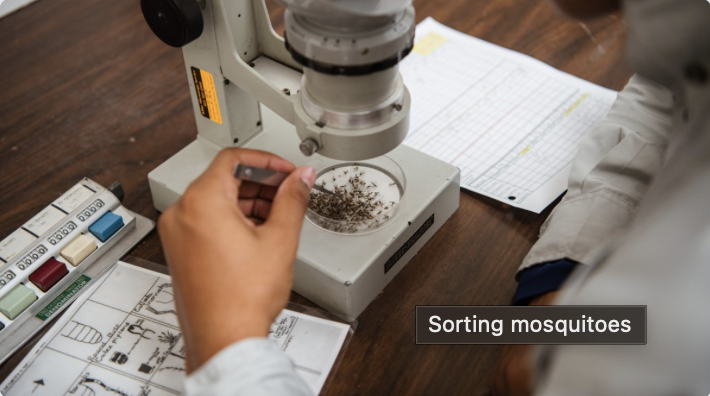
General Overview: Integrated pest and mosquito management provides a prevention-focused approach to reducing pests and mosquito-borne disease while limiting unnecessary pesticide exposure. These strategies combine monitoring, habitat modification, prevention, targeted treatment, and community involvement rather than relying on a single control method.
Pest Control: Resources for Housing Managers — U.S. EPA
What’s Included:
IPM definition
Pest prevention
Pest identification
Building pest exclusion
Safe pest-control methods
Public-health vector management
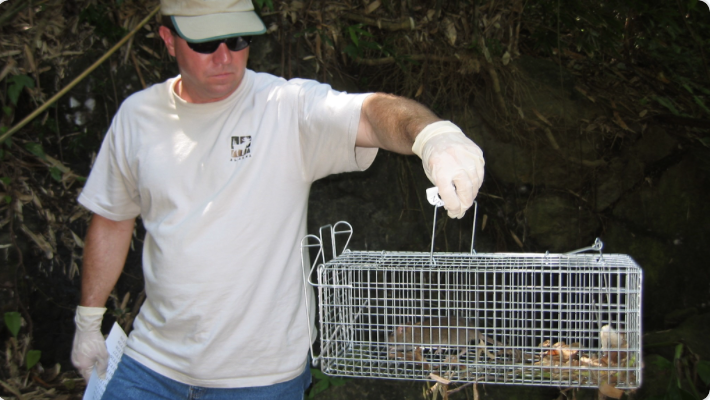
CDC explains how Integrated Pest Management can control pests and disease vectors by preventing infestations, keeping pests out of buildings, and safely managing existing pest populations.
Instructions: Open Tool> Identify the pest or vector affecting the community and review CDC's prevention, exclusion, and control recommendations. Determine what conditions are attracting the pest and how it may be entering buildings or public spaces. Use these recommendations to prioritize prevention and environmental improvements before chemical control.
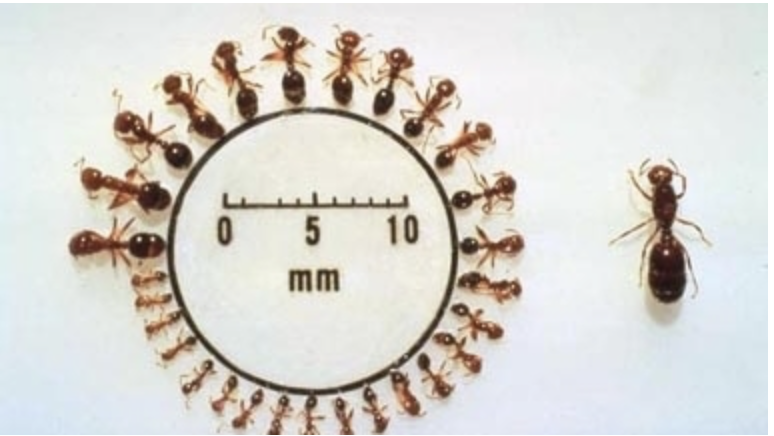
Imported Fire Ants — USDA APHIS
What’s Included:
Imported fire ant identification
Quarantine information
Regulated materials
Treatment requirements
Prevention of pest spread
State and federal program information
USDA provides information on imported fire ants, including their spread, impacts, quarantine areas, and measures used to prevent them from being transported into new communities.
Instructions: Open Tool > Review the imported fire ant information and determine whether your area falls within a federal quarantine zone. Check which materials, such as soil, plants, hay, or equipment, can transport fire ants. Use the treatment and movement guidance to identify steps residents, businesses, landscapers, and agricultural operations can take to prevent further spread.
Plant Pests and Diseases — USDA APHIS
What’s Included:
Invasive pest profiles
Plant diseases
Pest surveillance
Federal pest programs
Biological control information
Quarantines and movement restrictions
Pest prevention resources
USDA APHIS provides information about invasive insects, agricultural pests, plant diseases, quarantines, surveillance, and federal programs designed to prevent pests from spreading
Instructions: Open Tool > Search or browse for the pest affecting your state or community. Review its distribution, potential impacts, prevention recommendations, and any quarantine or control measures. Use the information to determine whether the pest is currently monitored or regulated and identify mitigation strategies for agricultural areas, forests, parks, or residential landscapes.